Corpus Thomisticum: the complete Aquinas in Latin
Aquinas is quoted far more often than he is read, and quoted most confidently by those who have read least. Part of the reason is practical: the complete works run to dozens of volumes, the translations are partial, and tracing a term across the corpus used to require a library and a month.
The Corpus Thomisticum reduces that to a search box.
What it is
A digital edition of the complete works of Thomas Aquinas in Latin, maintained by the University of Navarra under the direction of Enrique Alarcón. It provides the critical text, an index of works, and concordance tools that let you trace a term through the entire corpus.
Access is free and requires no registration. It is the standard digital reference for scholastic philosophy and theology.
Why it works as a source
Because it makes verification trivial. A claim about what Aquinas held can be tested against every place he used the relevant term, rather than against the three passages that circulate in secondary literature.
And because the Latin matters. Terms such as esse, habitus, intentio and ratio are rendered inconsistently in translation, and arguments built on an English rendering frequently dissolve when the Latin is checked.
How to use it
Verify the quotation. Before repeating a famous line, find it. A surprising proportion of what circulates under his name is paraphrase, or someone else.
Trace the term, not the topic. The concordance is the tool; searching a concept in English will not find it.
Read the article whole. The scholastic article states objections first and answers them last. Quoting an objection as his position is the classic error, and the structure of the page makes it avoidable.
For a Protestant reader
Disagreement with Aquinas is a respectable position; disagreement with a caricature of Aquinas is not. Having the text available in full removes the excuse, and the arguments one eventually makes against him become considerably better for it.
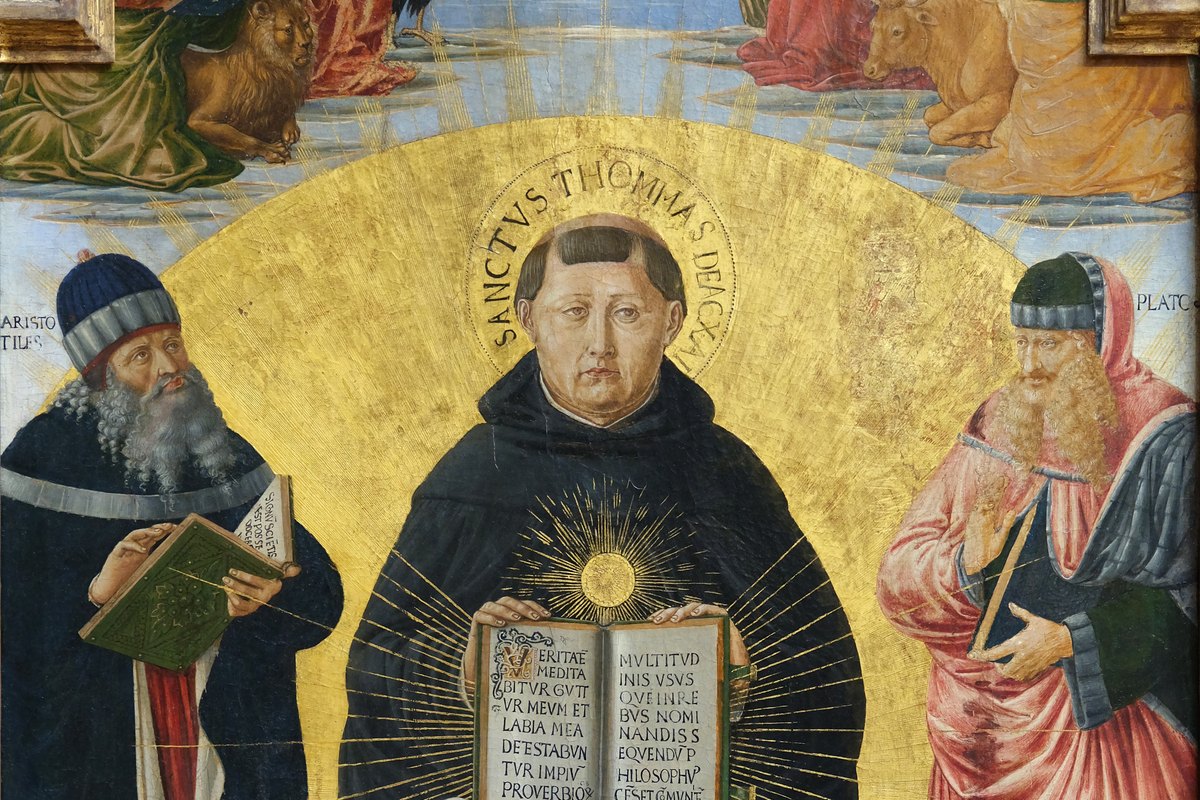
Image: The Triumph of Saint Thomas Aquinas, Benozzo Gozzoli, 1471. Musée du Louvre, Paris, public domain. Aquinas between Aristotle and Plato, with Averroes at his feet: the scholastic synthesis in one image.