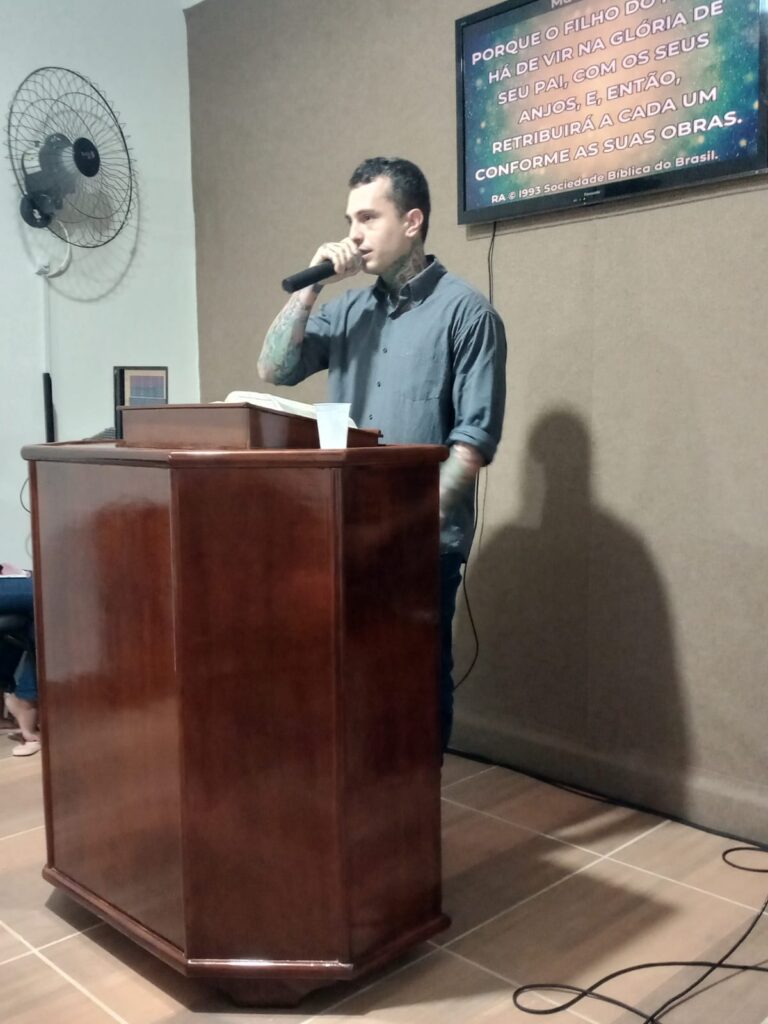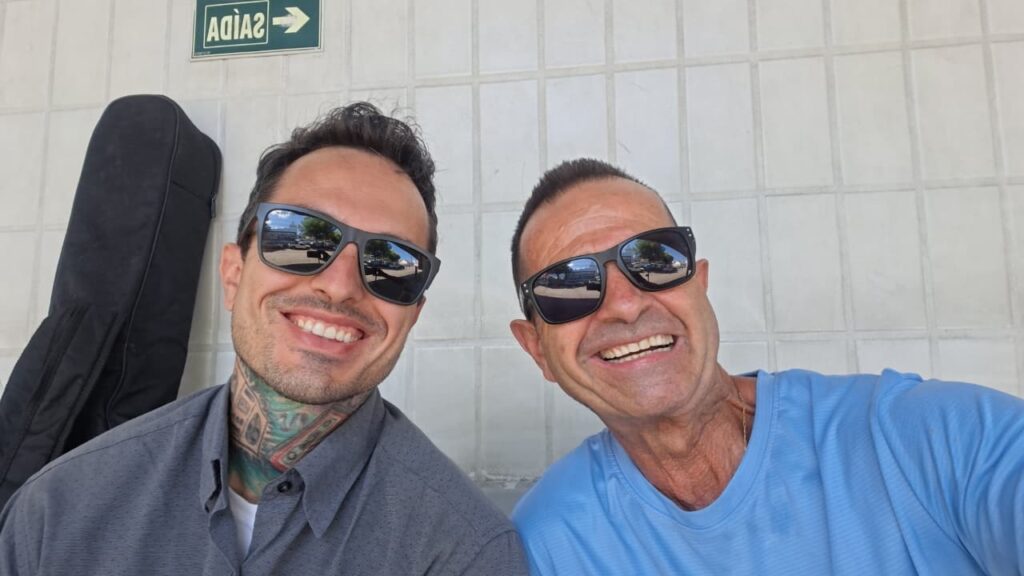
My Testimony: From Darkness to the Marvelous Light
If there is one thing a Pentecostal loves, it is a testimony. More often than not, it is the doorway into ministry. And beyond the evangelism that happens when you tell a true story, I have watched people’s lives turn around simply from hearing what someone else lived through. I am one of them.
I do not like talking about myself. Even so, something pressed hard on me to write this down — the whole road, from my conversion to this very moment, in the small hours of a Friday morning. I will keep it as short as I can, not least because my memory may fail me on the details of certain stretches.
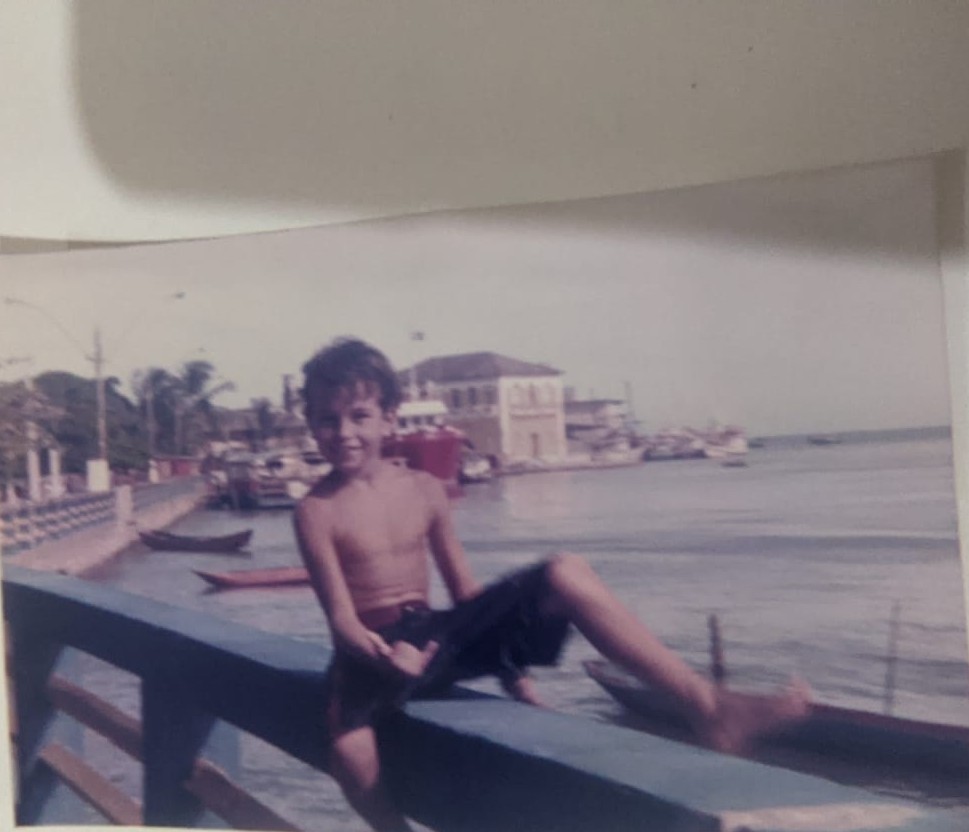
Let me start with childhood. I was an introverted, quiet, shy kid, and that turned me into a watcher — I read the people around me and picked up on a room with unusual sensitivity. I never went without anything: clothes, good food, good schools. And still, those were not happy years.
By the time I was seven I had lived in a string of different houses, and I think it cost me something in the way of stability. On top of that, home was a broken place. I watched my parents fight, and they were ugly fights. I remember the day my mother put every one of my father’s belongings out of the house.
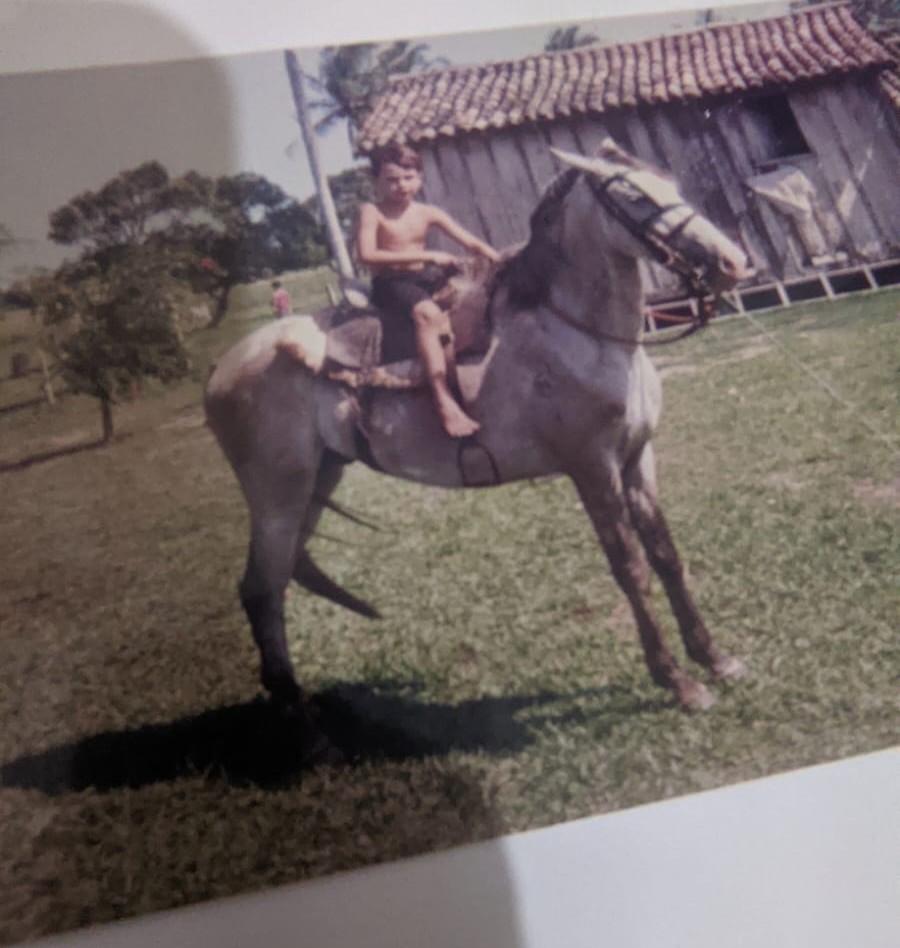
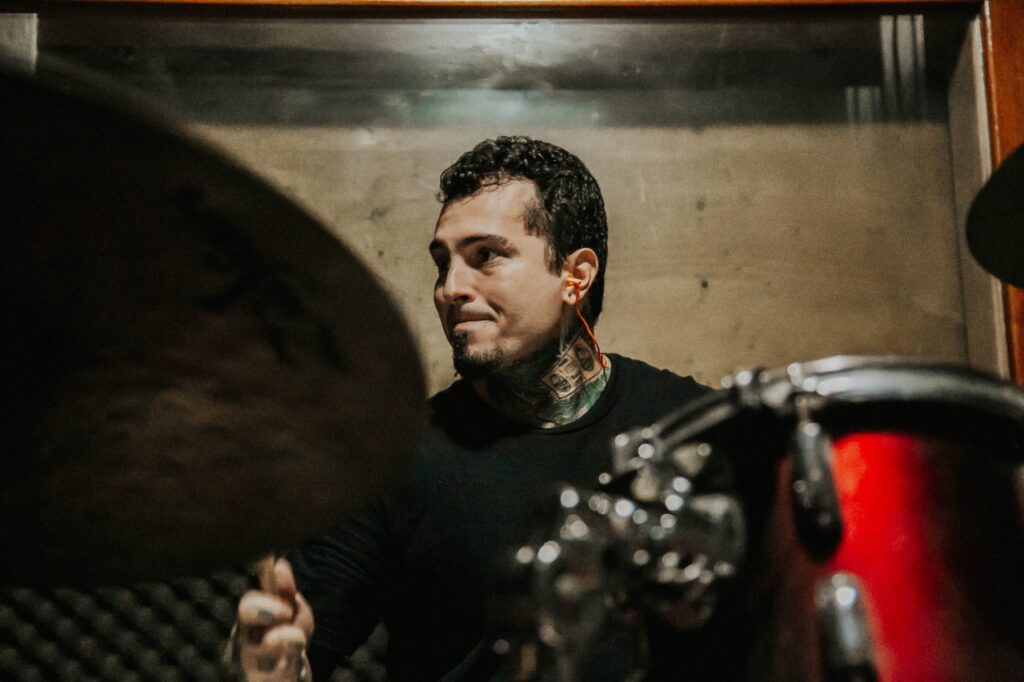
Leaving the family side of things aside for a moment, let me talk about how music found me. At five I was already playing at being a drummer — wrecking the wooden chairs, tearing up the couch. Then I hit on the bright idea of rigging a kit out of the percussion instruments my father kept around the house. Every weekend the family gathered for a barbecue, and there was always some old-school samba going to liven up the party.
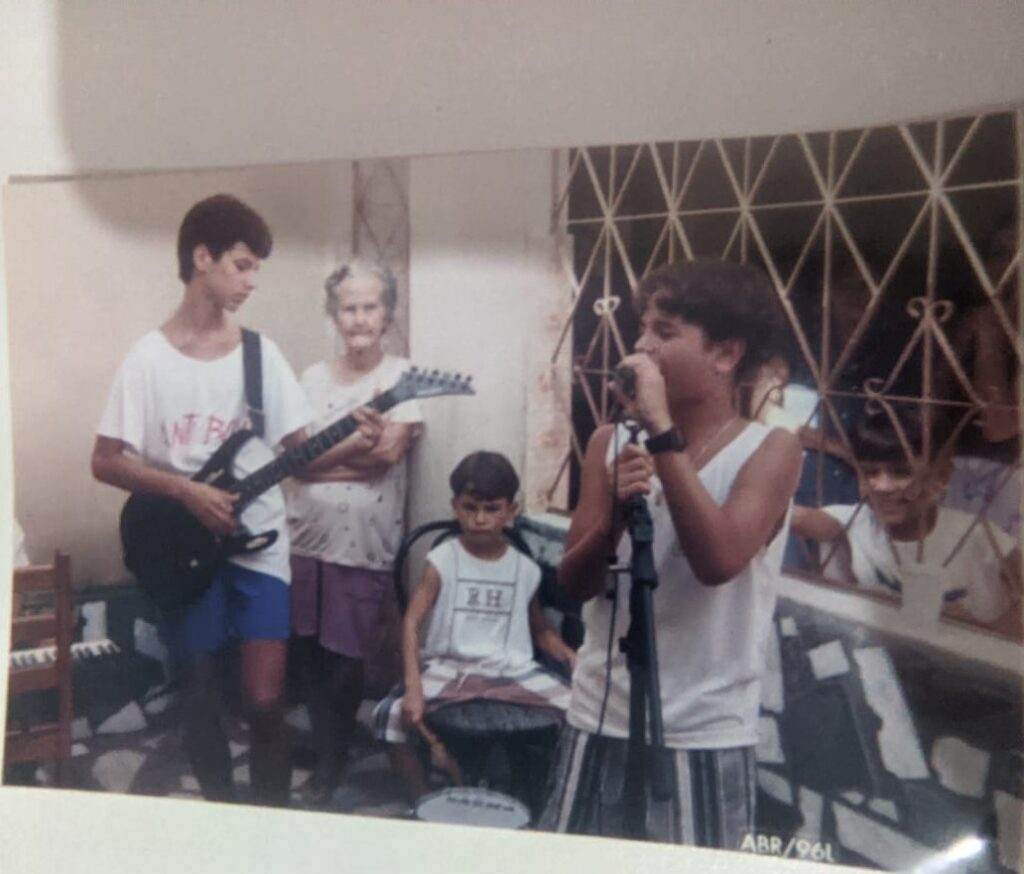
Curious and restless as I was, I kept looking for ways to build something closer to a real kit — until, at nine, I was given one. I could barely reach the pedals, the bass drum or the hi-hat. A little before that, my brother Roney, my cousin Igor, my uncle Raphael and I used to play at being a band, covering Mamonas Assassinas.
It was around then that a neighbor put some vinyl in my hands — yes, I am from that era — and it changed everything. I still remember the first records I ever heard: “Kill ’Em All” by Metallica and “No Prayer for the Dying” by Iron Maiden. Along with those two he lent me a VHS with the back half of Guns N’ Roses’ “Live in Tokyo,” and a Nirvana documentary called “Live! Tonight! Sold Out!”
From that day on, nothing was the same. We kept playing at being a band, and kept taking it more seriously. Then one day a last-minute chance came up to play a restaurant, open to the public. The kit I had been given was still sitting there wrapped as a Christmas present. They let me open it and use it that day — and from then on the game never stopped.
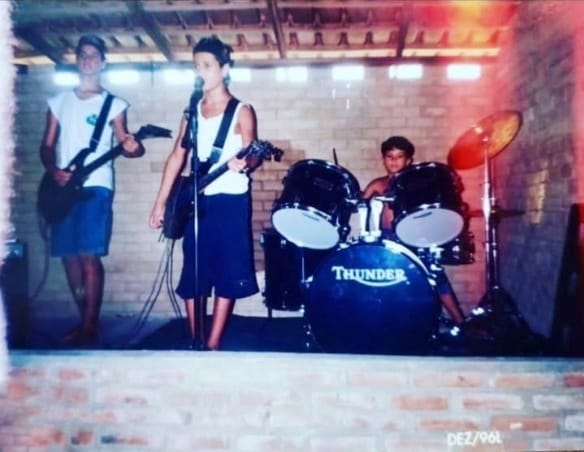
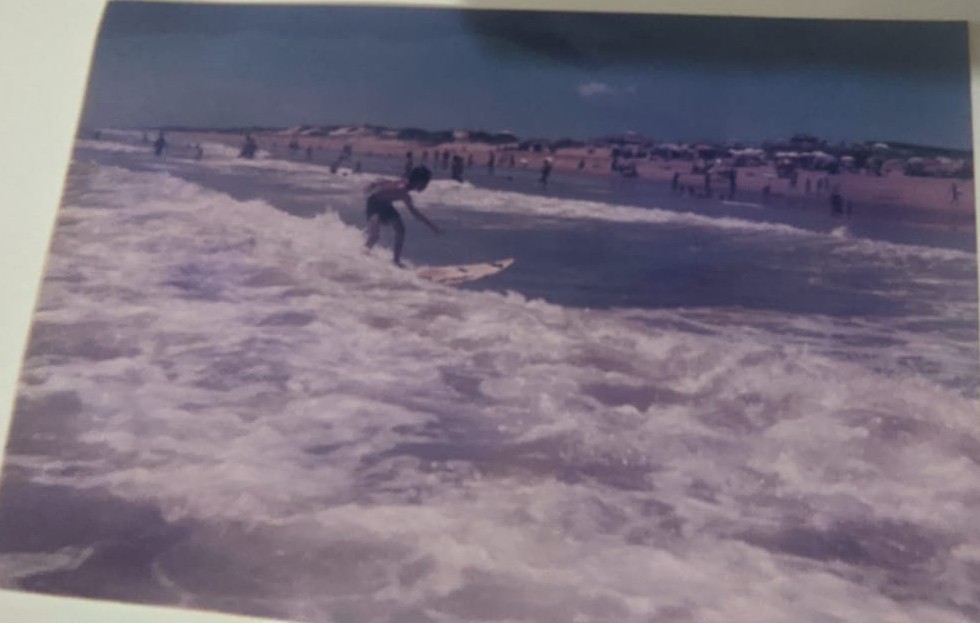
Around the same time I took up surfing, thanks to my great-uncle Waltinho — Mocotó, to the people close to him. We would get ourselves up at five every morning to catch the best waves. In the middle of 1997 we met our neighbor Diego Volpato, who joined the band and raised its level. We started playing more often, nights included. Our first show, though, was at an event the surfers of Guriri put on at a place called Praiano — an afternoon slot, with several bands on the bill.
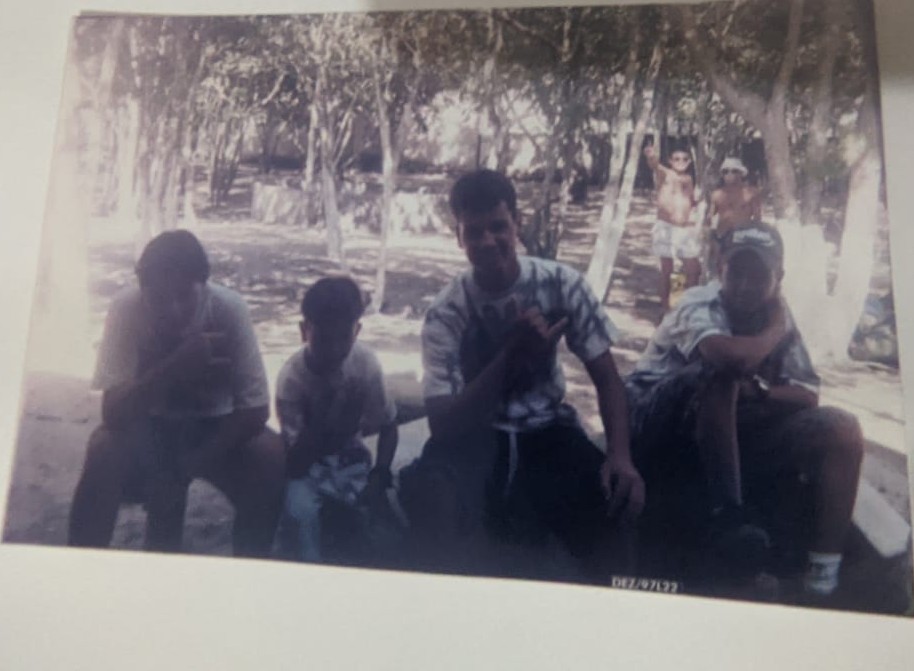
The band grew huge in town, and we called it ReadStones. The lineup shifted a few times before it settled into just me, Roney, and Diego. We played our own songs alongside covers of bands like The Offspring, Pennywise, Raimundos, and Charlie Brown Jr.
To keep this short: several other bands followed. But a defining moment came when I met a friend named Paulo Ricardo. I was living in Guriri by then. I also met Romário and Carlyle, both from São Mateus. I was eleven years old. Together we put together a Christian punk rock and hardcore band called Open a Smile.
I had never set foot in an evangelical church until Paulo Ricardo invited me to Batista Sião, next to the Old Church in São Mateus — I believe it is still there. If I am honest, I went so I could play drums. I knew nothing about the Bible (not that I know much now), and beyond the playing I had no idea what was going on in that place. I shared the kit with a brother three times my size and with a heart bigger still. Everyone called him Dudu.
Even so, I fell into The Dark Side of the Moon — those who know, know. At twelve we had the bright idea of starting a black metal band. We would spend whole weeks holed up in a house playing basketball, eating pizza and ice cream, and watching Hermes e Renato. In between all that we recorded original songs and covers of Immortal, Emperor, Dark Funeral, Dimmu Borgir, Marduk, Mayhem. The list goes on.
After that phase I met a young man named Olavo Lima, who everyone called Xaxá. We put together a power metal band along the same lines, originals and covers alike — Helloween, Gamma Ray, Blind Guardian, Hammerfall. We rented a house for him and the guitarist, known as Cacau, to live in, and used it as our rehearsal space.
A few years later I joined a band that marked me deeply and shaped who I became. It was called Limbo. We recorded an EP in Vitória and played all over, including a competition festival in Piúma. The lyrics were dense and searching, and pretty bleak. I put that down to the existentialist philosophy we drew on for inspiration. My view of the world kept getting darker — and in time I would live out everything we were singing about.
To close the subject of music, let me go back to where it started. At fifteen I would watch my brother, always surrounded by friends. He was playing reggae by then, while I lived shut away with a VHS of the full Oficina G3 concert built around the album “O Tempo,” and Dream Theater’s “Live Scenes from New York.” I had another Dream Theater tape too, “5 Years in a LIVEtime.”
I was worn out from that solitary life and wanted the reggae crowd to take me in. Reggae ran in the family — my father saw to that. I still carry the memory of riding in the back seat while he drove, listening to Edson Gomes, Bob Marley, Peter Tosh, Steel Pulse. He had records that left their mark on me too, like Bob Marley’s “Catch a Fire” and Peter Tosh’s “Mystic Man.”
Predictably enough, every one of my brother’s friends who listened to reggae and surfed also smoked Cannabis sativa. I decided to try it, and from that moment I never stopped. I used it every single day. We even started a reggae band called Dedamarelo. And it did not end there. That is how I am built: when something takes hold of me, I throw myself into it completely, until there is nothing left in me. By sixteen I had tried cocaine. It had me on the first go.
I hit bottom when crack came along, not long after. But let me go back a little. I had already been admitted to psychiatric clinics several times over psychotic episodes. The first was a place called Travessia, where there were schizophrenic patients everywhere. It looked like a scene out of a horror film. That was around when I started smoking. I would stub the cigarettes out on my arm and light another.
I was diagnosed with schizophrenia. At the second clinic, the psychiatrist Dr. Paulo Cesar Aragão diagnosed me with bipolar disorder and several other conditions, but not schizophrenia. I went through very dark stretches there — more than once I was strapped into a straitjacket and given a sedative injection. I would sleep two days straight and wake up having soiled myself. Heavy things. I passed through that clinic two or three times.
Back to the crack. There was a stretch when I was nothing but skin and bone. Lunch was an apple, on a good day. I traded everything in the house for drugs. I had a wardrobe full of original club and national team jerseys — all of it, gone. When my own things ran out I started on my brother’s. It brought chaos down on the house. I even stripped copper wire in the street because I had no money for anything. Then one day, as I was taking a piece of my mother’s gold jewelry to trade for drugs, standing there about to board the bus from São Mateus to Guriri, I broke down crying. I turned around, went home, and asked my parents for help.
My father worked offshore for Petrobras, and he took temporary leave to look after me and help. He found a clinic in São Bernardo do Campo, in São Paulo, called Bezerra de Menezes. We set a date for my admission. He flew me there, left me at the clinic, and went back to Espírito Santo. There was one problem: they put me in the wrong ward, the psychiatric unit. I lived through one of the worst nights of my life — a closed cell with nothing but a barred door, full of schizophrenic patients howling. An absolute nightmare.
The next day, after I made a great deal of trouble, they moved me to the right ward and treatment began. The place was beautiful on the outside and terrifying on the inside. The buildings were warm and charming; what I was living through inside them was not. Everything was new to me — not the kind of new that stirs philosophical wonder, but the kind ringed with uncertainty, fragility, and withdrawal.
There were people from every corner of the country, and from abroad as well. Treatment leaned heavily on the psychological side: a great deal of group therapy, plus physical and recreational activity, with medication alongside it. Each person was allowed a set number of packs of cigarettes a month. Since I lived far away, someone was assigned to manage mine.
I met people of every kind and every social class, from ex-convicts to doctors. I became friends with a doctor who had been admitted for a morphine addiction; by his own account he only worked while under the influence, surgeries included. I also grew close to a professional powerlifter — and there was an ugly episode involving him. One day I said I wanted to escape and was going to do something stupid. He went straight to the staff, who cut me off from the rest of the group and put me in a special ward. They gave me a sedative injection and I slept for roughly two days straight.
After forty days, I was discharged. My father came to collect me and we went back to Espírito Santo. From then on I had to cut certain ties, rebuild my circle of friends, and end a relationship I was in at the time. I stayed clean for a good while, though I kept smoking. I started attending an alternative church that met in the pastor’s house. Around then I went back to playing power metal — only this time it was gospel.
Between the coming and the going, I relapsed several times. I moved back to Vitória on my own. At that point a woman I had met at the clinic, whose father had been a patient there, came from São Paulo to live with me in Espírito Santo. But with the constant relapses and the nights out on the street, the relationship came apart. I have always been disordered when it comes to relationships. It left me with wounds and traumas that drove me back to drugs. A self-destructive cycle. An atomic bomb.
Later there was a period living in Jardim da Penha when I was addicted to cocaine and alcohol. It got so bad that I stopped going out and stopped speaking. I went months without saying a word; at most I said only what was strictly necessary. Seeing how critical it had become, I asked my parents for help. One side note: it was during this period that I read the Kurt Cobain biography, “Heavier than Heaven.” It hit me so hard that on a Friday I took a pile of medication along with drugs and did not wake up until Monday. I very nearly left this world for Gehenna.
My parents came for me and I went to live in Guriri. For months I stayed shut in the house, drinking Heineken, smoking, buried in a room in front of a computer. Hard times. I remember I smoked only Marlboro Red and Lucky Strike Red. I barely spoke and saw no one. Now and then I would play at the houses of acquaintances, or at parties around Guriri. At one of them I mixed a large quantity of Benflogin with cocaine and alcohol. The result was catastrophic. I asked to be admitted again.
I must have been twenty-three or twenty-four. When treatment was over I went home, and soon after decided to move back to Vitória. I had been living away from my parents since I was seventeen. Again I stayed clean for a time, and again I relapsed. I was thoroughly lost in those years. I used anything I could get hold of, except heroin — only because I could never find any. I did try morphine. Beyond that it was LSD, ecstasy, MD; everything, in short.
Dissatisfied with my life here, I decided to try my luck abroad. I planned it for the better part of a year and went to London. When I landed at Heathrow I got nervous during the interview and answered part of it in Spanish. I remember the officer saying to me: Stay here! And that was that. Two men came over, searched my bags, and took me up to a department inside the airport. I had longish hair at the time, a black Black Flag hoodie, and an enormous pair of headphones around my neck. So up I went, and sat in a room with a translator from Portugal and the British interviewer. He would ask the question looking me in the eye, the translator would put it into Portuguese, I would answer in Portuguese, he would translate it back into English — and on it went for a good while.
The upshot: an X stamped in my passport, a set of photographs taken like a prisoner, and my fingerprints on file. I was refused entry into the United Kingdom. All I ever saw of it was the airport, which, as it happens, reminded me of an episode of Mr. Bean. I had to wait for the next flight back in a holding area full of people from all over the world who had been stopped, every one of them talking in a different language at once. It was almost like Pentecost. Joking aside, I faced another twelve hours in the air with bitterness sitting in my chest.
When I set foot back in Brazil I did not want to speak to anyone. And the worst part: I had plenty of British pounds to start sinking with. I changed the pounds into reais and spent a long stretch with headphones on, talking to no one and using heavily. I had even stopped playing. After a long run of that decline, a friend who had played with me as a teenager asked me to come back and join a System of a Down cover band. I took the invitation, even though I was not a fan of their sound.
That opportunity led to others, and I was playing venues again. I traveled a fair amount to play nearby cities, cover band or not. The debauchery in that period went up sharply — I was changing girlfriends practically every week. And still I lived in a heavy depression, an existential emptiness I could not explain. Until one of those nights I met the woman who would become the mother of my son. We moved in together, and before long she was pregnant with Antônio. That is what finally got me off cocaine for good.
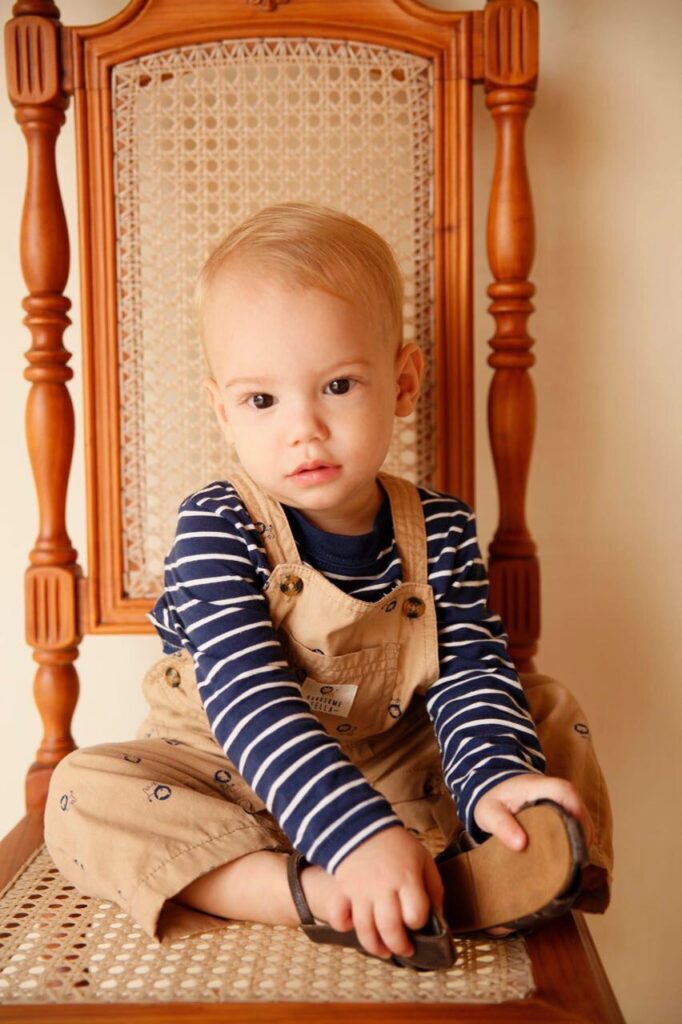
During that period I passed the entrance exam for FAMES, the Espírito Santo School of Music, in the popular music program. I was soon in the main band, traveling to play the Bossa and Jazz Festival in Santa Teresa. Yes — I played bossa nova and samba jazz. I was not at my best in those styles, but I went through them. Alongside that, chances to play the night circuit started coming in. It was in this same period that I lost my relationship, and my son went to live far away from me.
My life went into free fall: a closed circuit of drugs, women, and nightlife. The gigs dried up. The sin multiplied. The wrong friendships found their way in. I remember living in Jardim Camburi, walking the streets at dawn with a phone tucked under my shirt playing Sonny Rollins, Thelonious Monk, Bud Powell, and so many others. Anyone who has walked Jardim Camburi at that hour, around the stretch they call the “laminha,” knows exactly what I was risking.
Once again I found myself with no way out. No job, no band, no money — nothing but bad company and bad habits. I decided I needed an escape plan. I asked my parents to help me move abroad, this time to Lisbon. An acquaintance of mine was there and kept telling me to come over and play; he had played with Lion Jump, a reggae band well known here in Espírito Santo. I got the help I needed, made my arrangements in a short window, and went without a second thought.
And so I set foot on Portuguese soil. The place was anything but welcoming. I do not know whether it was the tattoos or the fact that I look American, but early on I met a great deal of prejudice and rejection from the Portuguese. I reached the hostel, put my things away, and headed for a square called Adamastor. What I found there shook me so badly that my first instinct was to fly home the next morning — and bear in mind I was pretty wild myself at the time. People were using everything, out in the open, from every country on earth, all in one place. Remembering it still makes my head swim.
It was there that I met the great Kal Robson. Kal is a pastor and an outstanding musician, and I had the privilege of playing with him countless times. He would pick me up in Benfica, drums and all, and talk to me about Jesus the entire drive to the gig. The result: I would arrive extremely on edge. I was practicing a Japanese Buddhist tradition at the time, Nichiren Daishonin. I studied it seriously, chanted the mantra, kept my own “sacred” space, the whole thing.
The high point in Lisbon came when our reggae band, Plantada, was invited onto the bill at Portugal’s biggest reggae festival, the Musa Festival — which no longer exists, incidentally. This was 2018, three days of international reggae names. On the opening day we played the same stage as Alpha Blondy. We went on first or second, if memory serves. I got to speak with him in my A1-level English and have a photo taken. As a teenager I used to listen to one of his albums that belonged to my brother, “Live at Paris Zénith & Paris Bercy.” It was a dream come true.
And yet, sitting behind the kit in that enormous arena that seemed to have no end, a thought landed on me: Is this what you dreamed of your whole life? Is this what you fought for all this time? It was a wake-up call, and back at home the emptiness only widened. To cut a long story short, I left Buddhism and went back to a way of living worse than before. I was in the same cycle I had been in back in Brazil — drugs, nightlife, women. I was deeply depressed.
Intrusive thoughts started coming, very ugly ones, and I had stopped playing altogether. I remember it as though it were today: November, winter in Lisbon. A biting cold, the city at a standstill. A Sunday evening. I made my dinner with no hope at all for the future. I went into my room in the house I shared with four other people, opened YouTube to watch something while I ate, and a video by Pastor Cláudio Duarte came up. I decided to give it a chance — after all, I had nothing else left. One caveat: I despised Christians. I watched that video and it made me laugh, on the very day I had thought about giving up for good. The subject was pornography, something I was also struggling badly with. Straight afterward I decided to watch his testimony. It moved me in a way I cannot explain.
And that was that. Dinner over, video over, life goes on. I went to sleep. The next day, a Monday, I woke up different — with spirit in me, and a will to live. I was not looking through the same lens anymore. Even so, I opened the wardrobe, took out the jar of skunk I had packed full (expensive stuff, by the way), and tried to use it. I could not do it. I picked up the jar, dropped it in the toilet, and flushed. I never used anything again. I went on drinking a little wine for a while, but I stopped feeling comfortable with that too. It was a genuine conversion.
I decided to spend Christmas and New Year in Brazil, to see my son and my parents. The moment I landed in São Paulo I could tell things had really changed. I began noticing what I had never noticed before, especially inside my own family. True to my holy restlessness, I decided at the last minute to go back to Lisbon in January. Once I was back in the Portuguese capital I tried to keep playing, but I could not stand that environment anymore. I kept to myself, reading the Bible on my phone. So I gave up music. I took work as a transport assistant. I could see the cost of living was not sustainable without music, so I moved to Leiria.
I joined a Brazilian church there, but before long I was seeing too much that was wrong, and I sought out the Portuguese Assembleia de Deus instead. They welcomed me warmly. I even had the chance to counsel a Portuguese couple — the same couple who later drove me to the airport when I returned to Brazil for good, at a point when every door had closed. I took that as a sign my time there was up. I also wanted to be near my son. I worked at a ceramics company, where I met a Brazilian who brought me to the Congregação Cristã no Brasil in Leiria. Through him, an acquaintance of his gave me my first Bible.
I was set on returning to Brazil. I went back — and that is when the real war began. I could find no peace at home. I moved in with my parents in Guriri. I went through a zealous phase of burning books, giving away band shirts, destroying things. I would fast in the middle of the night and stumble across old personal files. A great many things happened in me. Yet every time I tried to leave my parents’ house, something would go wrong and I would have to come back. I had nothing left, not even anywhere to go. Until one day I put a few books and some clothes in a backpack and decided to break away from my family.
In the middle of all this I tried to rebuild the relationship with my son’s mother. It did not work. She took me to a Baptist missionary base in Maruípe. It was there I met my namesake, Roger Rocha, who sent me on to his father’s church — Assembleia de Deus Hebrom, then in the Brisamar neighborhood of Vila Velha. I remember the night I sat with Pastor Vanderlei Rocha in his office; it was a Tuesday. I had nowhere to go and was about to sleep on the street. He decided to take me in, and that night I slept in a room at the church that was still under renovation. By Wednesday morning there was already a prayer meeting. After that I was taken to a house where four or five other people were staying.
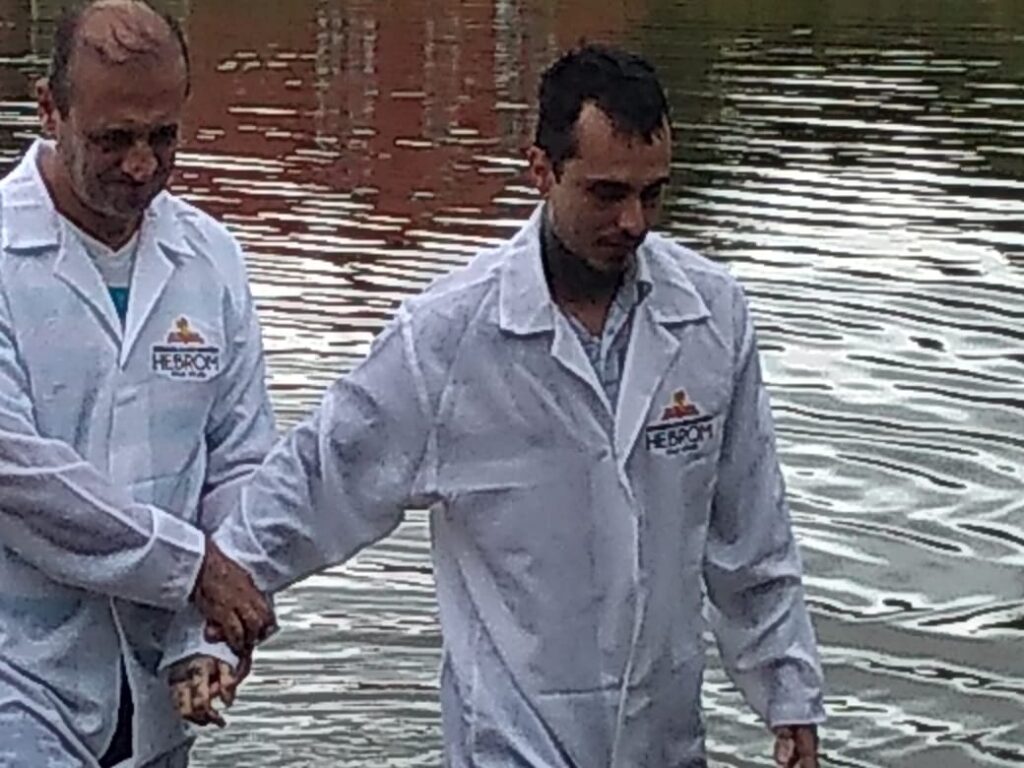
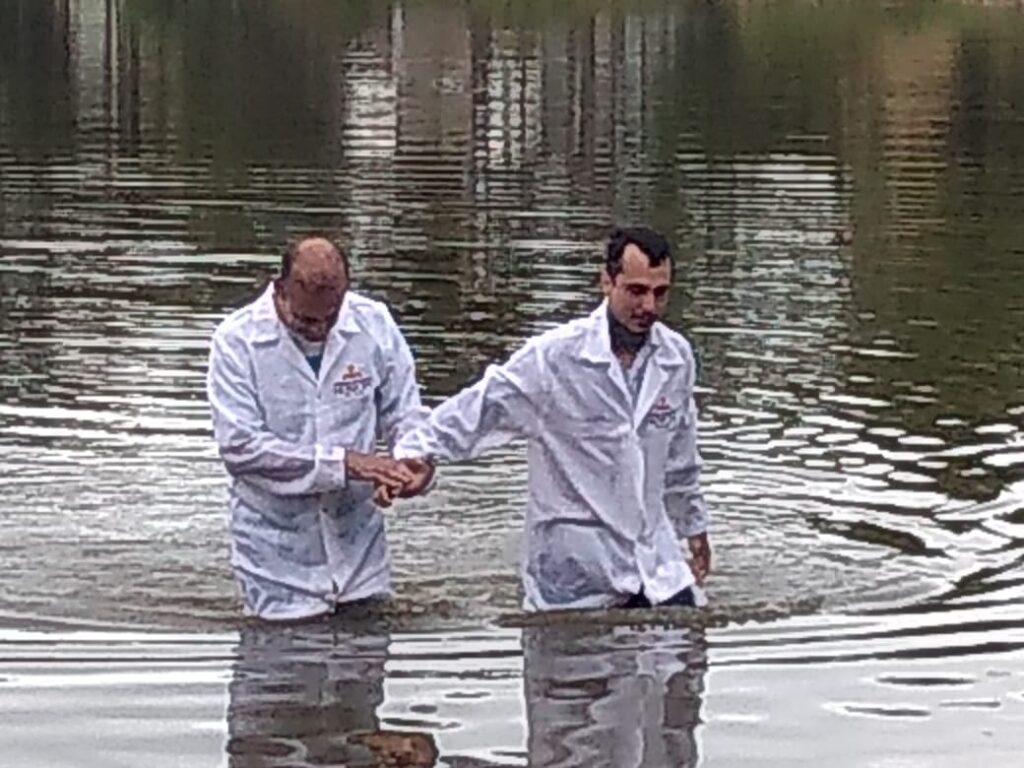
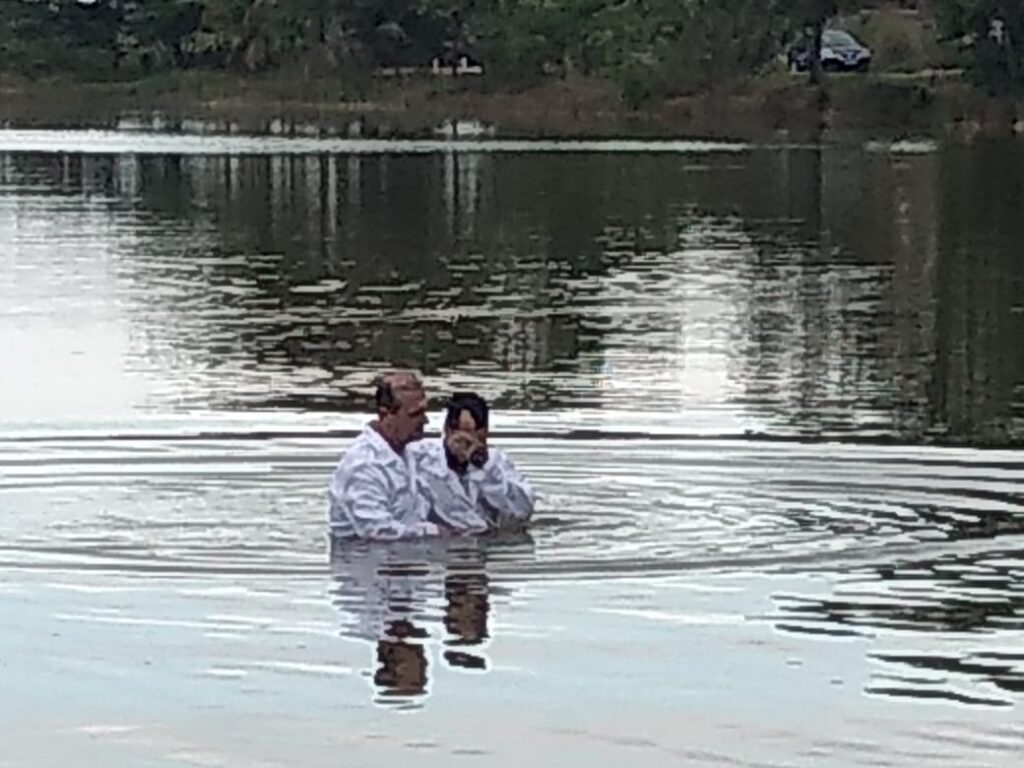
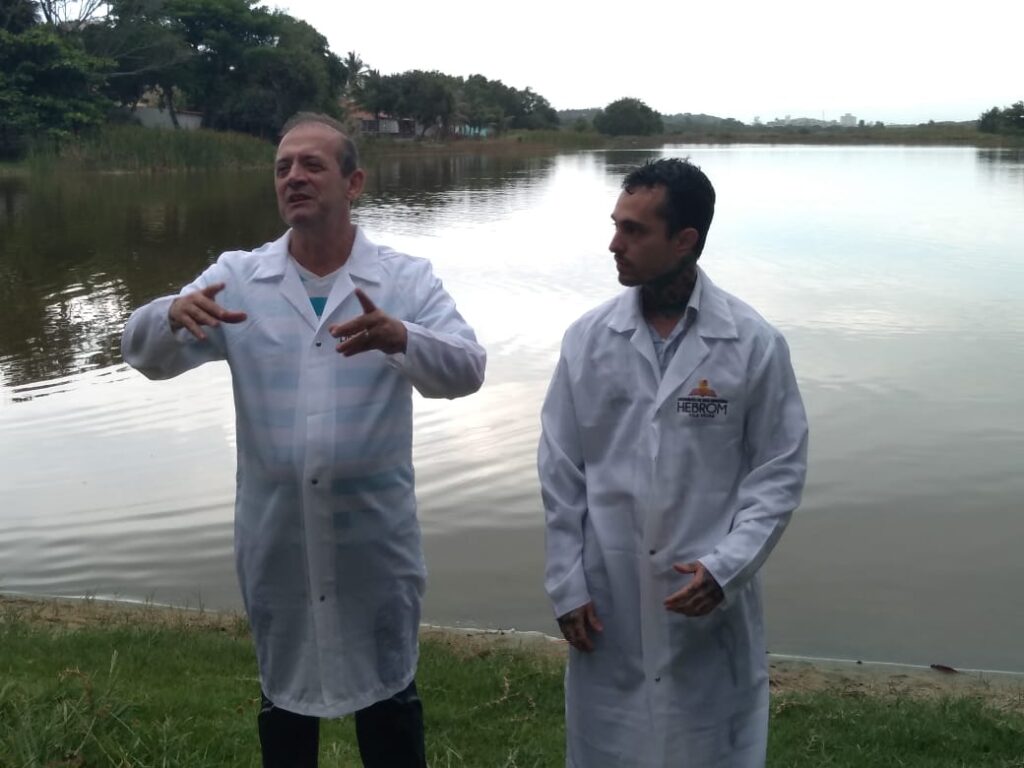
I spent a few weeks there, and then Pastor Vanderlei rented a small studio apartment for me behind the church. One room with nothing in it — an old stove and an old refrigerator. Later a brother donated a piece of furniture and a mattress that lay on the floor. That is where I lived through the hardest experiences of my life. No job, no money, no music, a new creature. I went through an enormous crisis over my tattoos, on top of having grown used to life in Europe. Readjusting to Brazil was a punishing process. Not long after, I finished the baptism course and was baptized by Pastor Vanderlei Rocha himself.
The battle of a life of faith had begun.
While I was still in that studio, I met a sister who prayed with me, gave me books, a Bible, and even a phone, since I had been without one. We grew close, because there was no one else left around me. Everyone had disappeared — the famous desert season. Then the pandemic arrived, and I was thin and badly weakened. A psychiatrist advised me to check into a clinic in Fundão, the Green House, to put on weight and stay protected. He also told me that if I caught COVID-19 in that state, there was a real chance I would not survive.
I stayed there about two months. When I came out I spent a while at my parents’ house in Guriri, put on a good deal of weight, and was able to move back to Vitória. I lived in an apartment in Jardim da Penha then. Getting to Hebrom from Vitória was well out of my way. I talked it over with the pastor and landed on this: I will try moving to São Paulo, and if it does not work out, I will come back here. So I stayed in Vitória with no fixed church, visiting a number of them in that stretch — Baptist, Church’s, Bola de Neve.
My faith went cold. I had not walked away, but I was completely unfruitful, turning up at services only now and then. For a while I even joined a church where I saw things so bizarre that if I set them down here they would scandalize unbelievers. In any case — once again, it was a Sunday. I was without hope, playing Counter-Strike in the afternoon, and I decided to go back to my roots. I searched Google for an Assembleia de Deus and went on my own. During the sermon I had the witness that I was to leave where I was and return to Hebrom. The next day I called Pastor Vanderlei and told him what had happened. He agreed, and helped me move from Jardim da Penha to Vila Velha.
This time was better: the apartment was in Coqueiral de Itaparica. I became a member of Hebrom again, and things started moving. I will keep it brief. I began dating the sister from my studio days, and two years later we married. The church had moved to another neighborhood by then, so I went to live nearby, in Jardim Colorado. Days after the honeymoon I lost my job. Newly married and unemployed — sheer desperation. I enrolled in one course, then another, and nothing came of any of it. Until the Spirit began steering me toward theology.
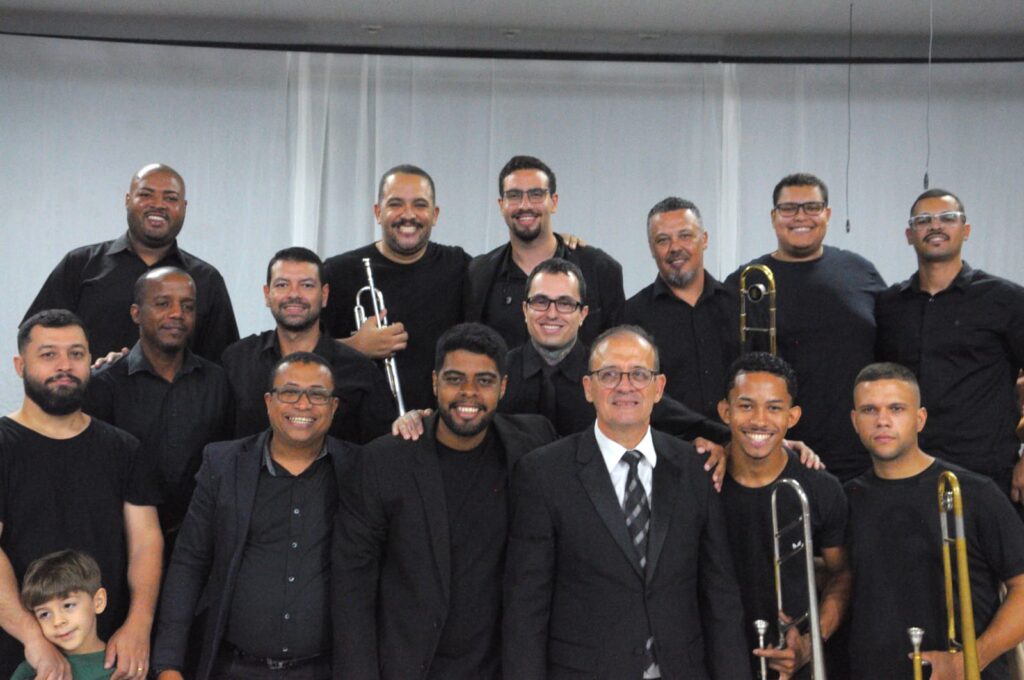
Like every beginner in academic theology, I became insufferable. That did a great deal to break my marriage. At the turn of 2024 it fell apart, and it caught me completely off guard. In the end I had to change everything — my routine, my church, my apartment, my neighborhood. I was starting from zero all over again. 2025 was a very hard year, and the year of my deepest thinking about life. One of the ways I worked through the grief of the divorce was to bury myself in art, literature, and philosophy. Here is a poem I wrote in that period:
How long has it been since this desert took us.
Vertigo, and fineness, and the bitterness of all that dust.
The ground gave way beneath me — fertile once, and now stone.
Everywhere I look there are reflections, and nothing but idleness.
I have tried to run from this place. I have tried not to exist.
I made poetry out of calamity; I was the poet of atrocity.
My blood changed color and the cold moved in.
I scatter against the wind, no longer sure what I want.
My mind came apart. My life lost its taste.
Night is day, day is hurry, and nothing holds my interest now.
All that once contented me I want today, and by tomorrow it is nothing.
With no sense left in it, right or wrong, my one cry is that You stay beside me.
I fooled myself that it did not hurt. I pretended to know what love is.
Storm and tidal wave — being faithful is what brought me to divorce.
I have grown weary, but I did not quit; I have stopped, but I chose to go on.
This is a hard idleness, this weight, and every day it grows heavier.
To bring the whole thing to a close: I passed through another church, faced a number of inward struggles, and so on. It was in this period that I had the idea of starting a blog and posting the papers I was writing for my theology degree. That is why the writing there is on the technical side.
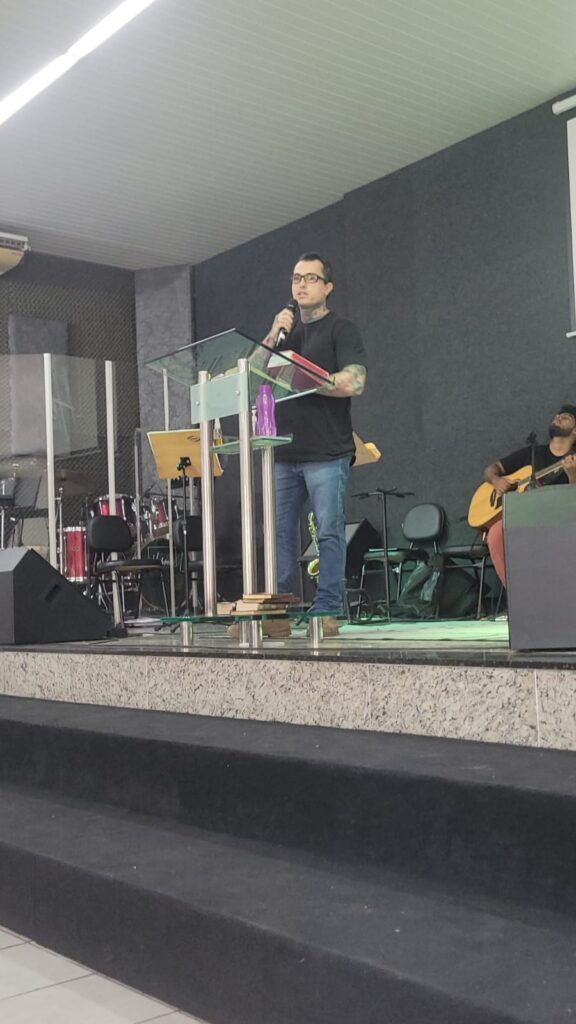
In broad strokes, brothers and sisters, that is the short version of the short version of my life. Jesus lifted me off the ash heap and out of the mud, and He is rebuilding me into His own image and likeness. It has not been easy. For nearly eight years now I have been in the thick of learning to live by a standard I was never raised to keep, always right at the edge of what I can bear. But through all of it the good hand of the Lord has held me up. My hope is that you, reading this, would find the Way to eternal life, which is Jesus. He alone is the truth that sets free, the healing of the soul, the peace that passes all understanding. And He chose to love us in spite of ourselves.
May God bless you abundantly!