Pentecostal Pneumatology and Empowerment for Service
By Roger Oliveira de Mattos¹
ABSTRACT
This article aims to explain the doctrine of the Holy Spirit (Pneumatology) and its contribution to Pentecostal Christian spirituality. Through the baptism in the Holy Spirit (a central doctrine of Pentecostalism, of a charismatic nature) believers receive a power anointing, the purpose of which is the service of evangelization and missions, as well as the experiences He provides. Pentecostal theology has as its pillars the writings of the theologian, physician, and historian Luke: the Gospel recorded by him and, especially, the book of Acts of the Apostles.
Keywords: Pneumatology; Holy Spirit; Pentecostalism.
¹ Bachelor’s student in Theology at Faculdade Refidim.
Email: rogerdums87@gmail.com
INTRODUCTION
The Holy Spirit is the third person of the Trinity. This does not indicate a hierarchical position, given that God is a triune being (Father, Son, and Holy Spirit) distinct persons, yet sharing the same divine nature. He is the Comforter, sent by Jesus to be with all who believe and to guide them in all Truth.
In his work Teologia Sistemática Pentecostal, the late master Antonio Gilberto (2008, p. 173) describes: Pneumatology is the doctrine of the Holy Spirit regarding His deity, attributes, works, and operations. The term pneuma (Gr. “air”, “wind”), cognate of the verb pneō, “to breathe”, “to blow”, “to inspire”. It means, in the Bible, primarily the human spirit, which, like the wind, is invisible, immaterial, dynamic, and powerful. But pneuma (Heb. ruach) also refers to the Spirit of God, the third person of the Trinity.
The Spirit of God is not a force, a power, or an influence, but a Person, God Himself. To understand this, one only needs to consider the following: the Lord Jesus sent the Comforter to be with believers in His place. Therefore, to fulfill such a function, He can only be a divine Being.
From the moment an individual accepts Jesus as their Savior, they are sealed by the Holy Spirit, who regenerates and sanctifies. However, Pentecostal pneumatology emphasizes the baptism with (or in) the Holy Spirit. This baptism is charismatic in nature, meaning it involves the manifestation of spiritual gifts.
Unlike baptism by the Holy Spirit, baptism in the Holy Spirit does not occur at the moment of salvation; it comes after salvation. In other words, it is an empowering granted to those who are already saved and justified.
PENTECOSTALISM AND PENTECOSTAL PNEUMATOLOGY
It is important to clarify what Pentecost is and how the Pentecostal movement arose. Pentecost was the fourth of the seven sacred feasts instituted by God in the Old Testament period. Also known as the Feast of Weeks and the Feast of Harvest, it occurred in the third month, Sivan, and lasted one day, the 6th of Sivan, a month that roughly corresponds to our June. Pentecost was the central feast among the seven that the Lord established for Israel (GILBERTO, 2008).
The Pentecostal movement emerged at the beginning of the 20th century and has its roots in the Holiness Movement of the 19th century, which arose from John Wesley‘s Methodism. This movement emphasized the doctrine of the “second blessing“, which followed conversion. From this experience, the believer experienced a profound sanctification, promoting a life of purity and integrity.
In 1901, with the advent of a preacher from Kansas, USA, named Charles Fox Parham, Pentecostalism began. He taught about seeking the baptism in the Holy Spirit. On one occasion, during a prayer meeting, one of his students began to speak in tongues, and from then on, the initial evidence of the baptism in the Holy Spirit was established.
The main landmark of the Pentecostal movement occurred in 1906, when the Azusa Street Revival took place, under the leadership of African-American pastor William J. Seymour, in Los Angeles, California. Seymour was strongly influenced by Parham’s teachings regarding seeking the baptism in the Holy Spirit. During the revival, many spiritual manifestations occurred, attracting people from across the United States and from various parts of the world. In this way, the Pentecostal message spread.
Pentecostalism officially arrived in Brazil through two Swedish Baptist missionaries, Daniel Berg and Gunnar Vingren, who had received the baptism in the Holy Spirit in the United States. They were influenced by the Pentecostal movement and came to Brazil to spread the message. This form of Pentecostalism became known as classical Pentecostalism.
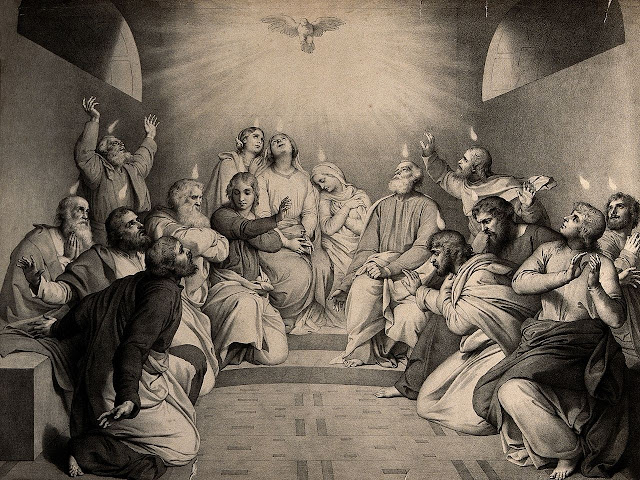
Pentecostal theology has its roots firmly grounded in the narratives of Luke, especially in the book of Acts of the Apostles. The pivotal episode is found in Acts 2, in which the Holy Spirit descends upon a house where people of various nationalities had gathered on the day of Pentecost. During the outpouring of the Holy Spirit upon those present, there was a manifestation of tongues as of fire, divided and distributed.
The baptism with the Holy Spirit has speaking in strange tongues as its initial evidence. The manifestation of speaking in tongues is also mentioned in the list of spiritual gifts in the First Letter to the Corinthians. When the believer is baptized in the Holy Spirit, the manifestation of speaking in strange tongues occurs, it does not precede it: “they were all filled with the Holy Spirit and began to speak in other tongues” (Acts 2:4). In this passage, the word “and” (in Greek, καί, kai) is a coordinating conjunction.
Luke’s pneumatology differs from Paul’s pneumatology. While the former has a charismatic character, the latter is soteriological in nature. In other words, from Luke’s perspective, the expression “filled with the Holy Spirit” carries a charismatic dimension.
BAPTISM IN THE HOLY SPIRIT
The baptism in the Holy Spirit is a hallmark of Pentecostalism. Through this process, the believer is empowered to proclaim the Gospel and receives a spiritual anointing for personal and corporate edification. However, one must actively seek this baptism.
Dr. Pommerening (2024, p. 39), in his book Teologia da Experiência, states: The Holy Spirit, in the act of baptism, communicates, transmits, and inserts into the believer the love of God, making them feel loved and cherished, accompanied by speaking in tongues as initial evidence and the practice of love as a continuous evidence. In addition to immersion in God’s love, the fire of the Spirit burns impurities in the believer’s heart and potentiates, revives, and energizes virtues.
There is a controversy about the meaning of the baptism with the Holy Spirit and with fire, proclaimed by the prophet John the Baptist (Matt 3:11), even within Pentecostalism. Some argue that the baptism with fire in this passage refers to the coming judgment, while others maintain that this baptism is with purifying fire. However, the vast majority of Pentecostals favor the second interpretation.
Pommerening (2014, p. 39) further states: It should be clarified, however, that Christians not baptized in the Holy Spirit can also develop missionary zeal and the ethical transformation of love. The baptism in the Holy Spirit therefore does not differentiate believers into superior, more spiritualized classes, but it certainly facilitates the observance of a virtuous spiritual life and missionary zeal.
The purpose of the baptism in the Holy Spirit is the expansion of the Kingdom of God and the promotion of the unity and fellowship of the saved, as opposed to sectarianism. That is, the inclusion of all in the Body of Christ, regardless of their confession of faith. As evangelism and missions are carried out throughout the world, the experience provided by the baptism in the Holy Spirit makes the believer more effective in proclaiming the Gospel.
SPIRITUAL GIFTS AND THEIR USEFULNESS FOR SERVICE
As Antônio Gilberto observes: A spiritual gift is a special and supernatural endowment or concession by the Holy Spirit, and of divine capacity upon the believer, for special service in the execution of divine purposes for and through the church (GILBERTO, 2008, p. 195).
There are natural gifts, coming from God for the creation of nature (fauna, flora, water, air, fire, light) and gifts in the human sphere (talents, aptitudes, virtues, qualities). Nevertheless, the gift that comes from the Spirit is a supernatural gift intended to promote the expansion and edification of the church.
These gifts are found in 1 Corinthians (12), Romans (12), and Ephesians (4). The gifts listed in these books refer to service (διακονία) for the saints. They are divided into spiritual and ministerial gifts, both destined for Christian service.
To each is given the manifestation of the Spirit for the common good. To one is given through the Spirit the word of wisdom, and to another the word of knowledge according to the same Spirit; to another faith in the same Spirit, and to another gifts of healing in the one Spirit; to another the working of miracles, to another prophecy, to another the discerning of spirits, to another various kinds of tongues, and to another the interpretation of tongues. All these are activated by one and the same Spirit, who allots to each one individually just as the Spirit chooses (1 Cor 12:7–11).
It is worth noting that exercising spiritual gifts does not require being baptized in the Holy Spirit; however, the believer who has received the baptism with the Holy Spirit may exercise the gifts in a potentiated manner. It can be affirmed, therefore, that although Spirit baptism is not a prerequisite for exercising the gifts, it intensifies their manifestation.
In a dialogue between Pommerening and Gulanda (2019, p. 93), in the article Alteridade, convivialidade e escuta: princípios para uma prática pentecostal do cuidado: Principles for a Pentecostal Practice of Care, it is stated: Pentecostalism, therefore, cannot reduce the action of the Holy Spirit to itself, at the risk of betraying its own movement. Likewise, Pentecostal Theology should not occupy itself solely with the overvaluation of charismatic gifts to the detriment of the breadth of the Spirit’s action. Thus, life according to the Spirit is not reduced to a comfortable condition; rather, it is driven by the pneumatological paradigm and is associated with the way in which the Holy Spirit welcomes humanity, caring for it, guiding it toward the path of God.
Spiritual gifts also serve to attract unbelievers through care. Through the action of the Spirit, life is manifested where spiritual death exists. Thus, well-being is generated in environments lacking empathy, concord, and solidarity, thanks to the influence of the Holy Spirit.
FINAL CONSIDERATIONS
The Holy Spirit is responsible for providing life; however, the benefits He offers can only be obtained through relationship, since He is a Person. To receive the baptism in the Holy Spirit and be clothed with power, one must first believe and then seek through the spiritual disciplines: prayer, fasting, and meditation on the Word of God.
In this way, spiritual gifts also serve to reach the unsaved in Christ Jesus, promoting life, caring for the helpless, healing the sick, and working miracles and wonders. Thus, the Kingdom of God expands to the ends of the earth.
REFERENCES
GILBERTO, Antonio. Teologia Sistemática Pentecostal: Pneumatologia. 2. ed. Rio de Janeiro: CPAD, 2008.
POMMERENING, C. I.; GULANDA, O. A. C. Alteridade, convivialidade e escuta: princípios para uma prática pentecostal do cuidado. Joinville: Reflexus – Revista de Teologia e Ciências das Religiões, 2019.
POMMERENING, Claiton Ivan. Teologia da Experiência: implicações afetivas e racionais na interpretação pentecostal das Sagradas Escrituras. Rio de Janeiro: CPAD, 2024.
THE HOLY BIBLE. English Standard Version. Wheaton: Crossway, 2001.