Faith and Philosophy: analytic Christian philosophy
For most of the twentieth century it was taken for granted in Anglo-American departments that a philosopher who believed in God had made a professional mistake. That assumption no longer holds, and the change has a documented history. A good part of it happened in one journal.
Faith and Philosophy is the journal of the Society of Christian Philosophers, and the principal venue of analytic Christian philosophy.
What it is
A peer-reviewed journal publishing philosophical work on the existence and attributes of God, the problem of evil, faith and rationality, religious epistemology, and Christian doctrine examined by philosophical means. ISSN 0739-7046.
The archive is hosted in open access by the repository of Asbury Theological Seminary, which means decades of the field’s core literature are free to read.
Why it works as a source
Because the standard of argument is set by the discipline, not by the subject matter. A paper defending a theistic position here has to survive referees who will attack the inference, and that is precisely what makes it worth citing in a context where religious claims are contested.
For a reader coming from a devotional literature, the register is itself the lesson: conclusions are stated as theses, objections are given in their strongest form, and the author concedes what cannot be defended.
How to use it
Find the best objection to your own position. It is almost certainly published here, argued by someone sympathetic to your tradition.
Trace a debate across issues. Many discussions run as reply and counter-reply over several years; reading the sequence teaches more than any single article.
Mine the footnotes. They are the map of the field.
What this changes
Apologetics argues to win; philosophy argues to find out. The two can share premises and still differ entirely in what counts as success. Reading a journal where the second standard governs is the fastest way to notice the difference in one’s own writing.
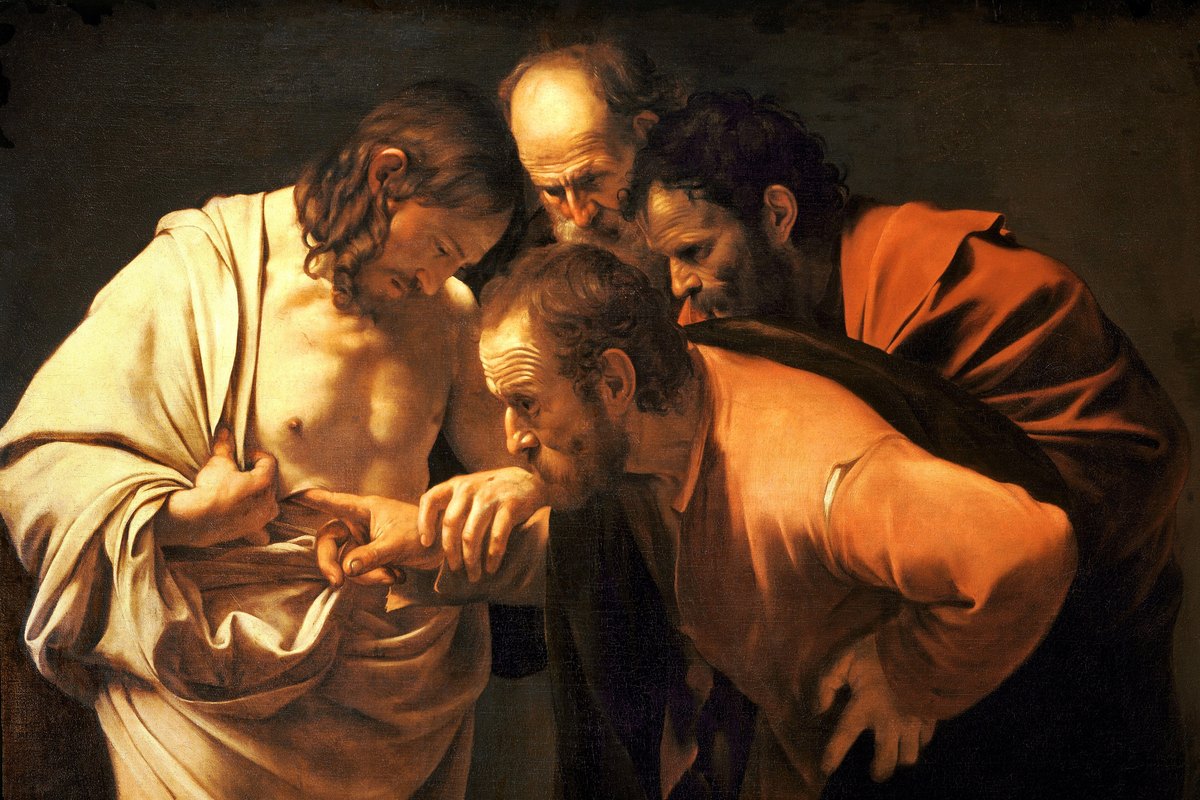
Image: The Incredulity of Saint Thomas, Caravaggio, 1601-1602. Picture Gallery of Sanssouci, Potsdam, public domain. Faith and evidence in a single gesture.