Internet Encyclopedia of Philosophy: the free companion
There is a practical gap in philosophical reference work. Stanford is excellent and incomplete: it commissions entries as authors become available, so some figures and topics have waited years, and some are still waiting.
The Internet Encyclopedia of Philosophy fills a good part of that gap, and it is also peer-reviewed and free.
What it is
A philosophy encyclopaedia with an international editorial board, in which entries are submitted, refereed and signed. The editorial process is lighter than Stanford’s, and the result is a different profile: broader coverage, generally shorter entries, and a more introductory register.
Why it works as a source
For two reasons that matter in practice. First, coverage: it has substantial entries on figures Stanford does not yet treat — including several in continental philosophy, in religious thought, and in traditions outside the Anglo-American mainstream.
Second, pitch. A beginner reading Stanford on a difficult topic often drowns in a first paragraph written for specialists. The IEP entry on the same topic frequently gets you to the point where the Stanford entry becomes readable. Used in that order, the two are complementary rather than redundant.
How to use it
Start here, finish at Stanford. For an unfamiliar topic, the sequence saves time and prevents the false impression that you have understood something you have only skimmed.
Check it when Stanford has no entry. Before concluding that a figure is minor, look here; the absence is often editorial rather than substantive.
Use it to prepare teaching. If you need to explain a concept to a class or a study group, the IEP register is closer to what you will actually say.
One caution
Peer review varies in depth across any encyclopaedia, this one included. For a claim that carries real weight in your argument, go to the primary text or to a journal article. Reference works tell you where the discussion is; they are not the discussion.
Open the Internet Encyclopedia of Philosophy
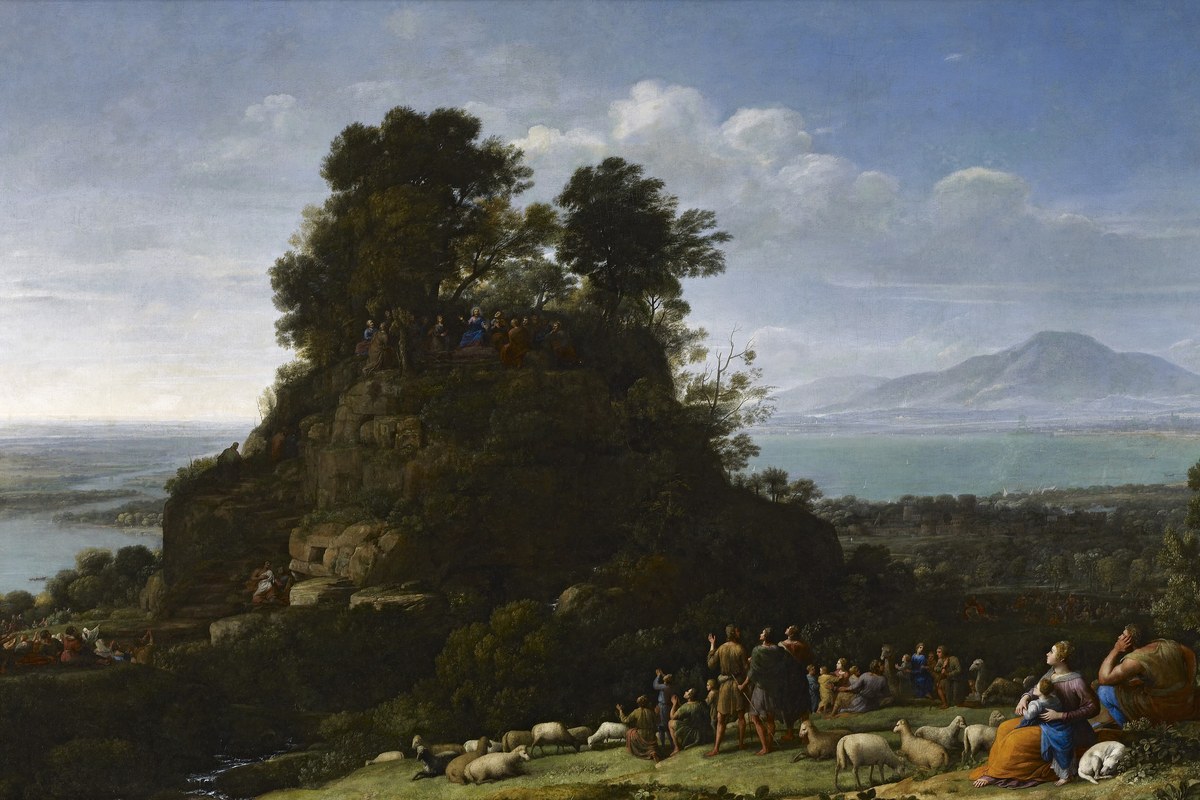
Image: The Sermon on the Mount, Claude Lorrain, c. 1656. The Frick Collection, New York, public domain. Teaching given in the open, to anyone who climbs the hill to hear it.