Journal of Analytic Theology: doctrine argued precisely
Analytic theology is a simple proposal with uncomfortable consequences: take the doctrines the church confesses and submit them to the standards of clarity and argument that philosophy applies to everything else. State the thesis. Define the terms. Show the inference. Face the objection.
The Journal of Analytic Theology is where that programme is carried out, and it is entirely open access.
What it is
A peer-reviewed journal dedicated to analytic theology, hosted by Baylor University on the Texas Digital Library platform. ISSN 2330-2380. There is no charge to read and no charge to publish.
Its subjects are the doctrines themselves — Trinity, incarnation, atonement, providence, grace, resurrection — handled with conceptual tools rather than with rhetorical ones.
Why it works as a source
Because it makes explicit what systematic theology often leaves implicit. A doctrine of the atonement either has a coherent account of how one person’s act bears on another’s guilt, or it does not; the analytic treatment asks that question directly and does not accept mystery as an answer until the argument has been made.
This is not a hostile procedure. Most contributors are confessing Christians, and the aim is clarification rather than demolition. But it is an exacting one, and the exactness is the point.
How to use it
Pick the doctrine you teach most often. Read the recent literature on it here. You will find distinctions you have been collapsing.
Watch the method, not only the conclusion. You may reject a paper’s thesis and still gain from how it set the problem up.
Note what remains contested. Where competent believers disagree after careful argument, dogmatism is unwarranted, and knowing where those places are is part of theological maturity.
An honest limit
Analytic theology is strong on the structure of claims and weaker on history, liturgy and the affective dimension of faith. It is one instrument among several, not a replacement for the others, and treating it as the whole of theology would be its own kind of reduction.
Open the Journal of Analytic Theology
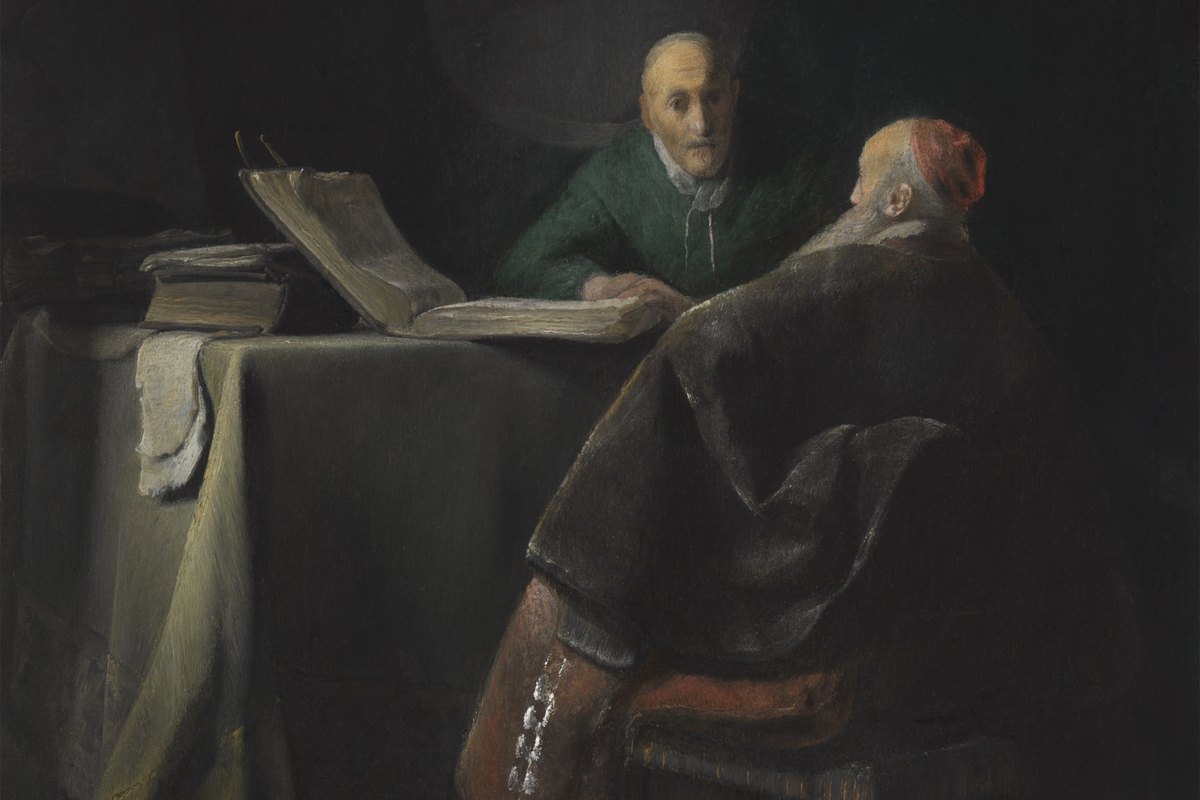
Image: Two Old Men Disputing, Rembrandt van Rijn, 1628. National Gallery of Victoria, Melbourne, public domain.