Christian Classics Ethereal Library: The Fathers, Searchable and Downloadable
Calvin University maintains a library that most of its own students never think about, and that thousands of pastors and researchers around the world depend on daily. The Christian Classics Ethereal Library (CCEL), has been digitizing the Christian written tradition since the mid-1990s, and it remains one of the most useful things on the open web.
Where New Advent gives you the Fathers in a clean reading interface, CCEL gives you the Fathers plus the machinery to work on them.
More Than the Fathers
CCEL carries the full Schaff corpus, but it does not stop there. It also holds Schaff’s own History of the Christian Church in eight volumes, the classic creeds and confessions, and a wide range of works from the medieval, Reformation, and modern periods.
For a researcher, this breadth is the point. Patristic study constantly requires the next link in the chain: how a fourth-century formula was received in the Middle Ages, how the Reformers read Augustine, what the confessions did with Chalcedon. Having the whole sequence in one searchable place saves hours.
The Features That Set It Apart
Three deserve mention.
Full-text search across the corpus. You can ask where a phrase occurs throughout the Fathers, not merely inside one work. For tracing a formula across authors, this is the single most valuable function on the site.
Downloads in ePub and PDF. Whole volumes come off the site in formats you can read on a tablet, annotate offline, and keep. For anyone with unreliable internet, that changes what is possible.
Scripture indexing. Many texts are linked to the biblical passages they discuss, which means you can approach a Father through a verse rather than through a title — the natural movement for a preacher preparing a sermon.
Where to Be Careful
The same caution applies here as anywhere: these are nineteenth-century translations, and they carry the assumptions of their moment. They are entirely adequate for reading and for orientation; they are not the text you cite when a single word decides your argument.
Note also that CCEL is a library of Christian classics broadly conceived, not a patristics database. Its selection reflects a Protestant reading tradition, so entire areas (Syriac literature, later Byzantine theology, much of the hagiographical material), are thin or absent.
The Practical Recommendation
Use New Advent to read and CCEL to search. That division of labor works, and between them the two sites cover most of what a researcher without library access needs from the patristic corpus.
Then download one volume — Schaff’s History, volume three, on the Nicene era is a good first choice, and read it away from a screen. Sustained reading is where understanding actually forms.
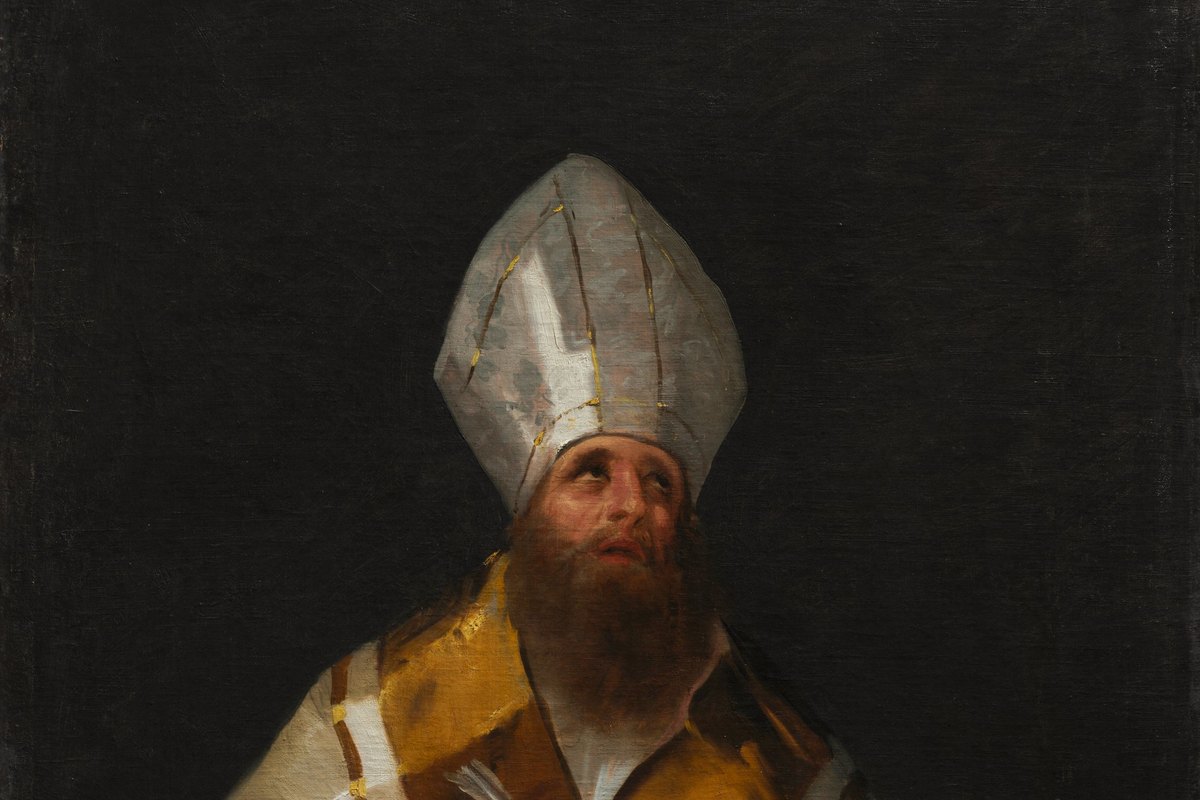
Image: Saint Ambrose, Francisco de Goya, c. 1796-1799. Cleveland Museum of Art, public domain. Ambrose of Milan, the bishop who baptized Augustine.


