Theological Analysis of the Book of Judges and its Contributions to the Church in Contemporary Times
The book of Judges portrays the deplorable condition of the people of Israel shortly after the conquest of the promised land. Unlike the narrative of Joshua, Judges reveals a widespread decline in the moral, social, and spiritual spheres. For want of human leadership to guide the people through the disorder in which they found themselves, a cycle recurred again and again: sin, apostasy, captivity, and at last repentance and deliverance — and this even with God Himself as king over the whole nation.
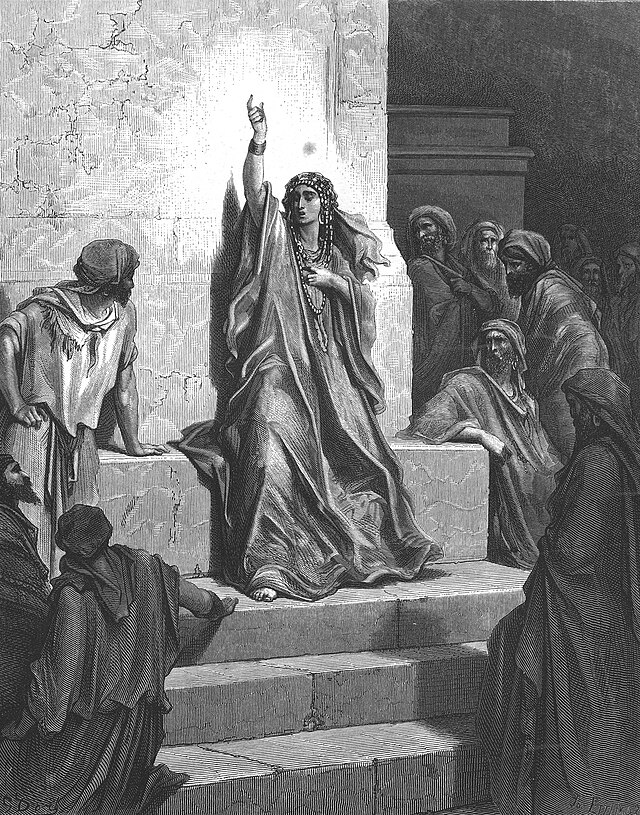
Read theologically, the book yields a number of lessons for the contemporary church. What stands out is Israel’s need for a capable leader to instruct and guide them in social matters as much as in spiritual and liturgical ones. God’s own governance, though perfect, did not by itself keep the people faithful; He would therefore raise up men — and one woman — to deliver them from the hands of foreign oppressors.
Pagan influence nevertheless reached the hearts of the Israelites, culminating in a catastrophic cycle of sin and bondage. The closing stage of the narrative shows just how far the calamity had gone: “In those days there was no king in Israel. Everyone did what was right in his own eyes” (Judg. 21:25). Israel stood in transition from a theocratic to a monarchical period; yet in that interval there were neither kings nor judges, and the nation fell into complete decay.
Even judges charged with executing God’s justice and bringing deliverance were not enough. Only One is sufficient: YHWH. From Him come every conquest and every victory, and on Him alone must all dependence rest. In the Old Testament period God’s grace had not yet been fully manifested; His mercy, however, was already present, and in a sense it amounted to the same thing. The Lord was already showing His unconditional love in forgiveness and restoration, raising up a new judge whenever the people were perishing at the hands of their adversaries.
It is worth observing that, in the absence of strong and faithful spiritual leadership, Israel inclined toward the customs and gods of surrounding peoples such as the Canaanites, sinking into utter corruption. Here the contemporary church finds an example to avoid — and a promise to rest in, for God always preserves His faithful remnant, like “those seven thousand who had not bowed the knee to Baal” (1 Kings 19:18). A church that is well ordered ecclesiologically, in its liturgical and pastoral life alike, is less liable to be conformed to the pattern of the world. The church is — and must be — holy; it is set apart for a purpose in the world.
The transition from the theocratic to the monarchical period duly unfolded in the history of God’s people; that system, however, proved no solution. Generation followed generation, and the people lived on in instability, defeat, and division — until, with the coming of the Messiah, freedom was granted by grace, through faith. He alone is the way to eternal life; in Him redemption is found. The answer to spiritual and moral chaos lies not in the power of men but in the power of God.
Humanity’s dependence, therefore, must rest on Jesus Christ alone: He is the way, the truth, and the life. The book of Judges mirrors the condition of the human heart, sinful and unsteady. Yet God’s mercy points forward to the redeeming grace of a God who never abandons His children. The contemporary church must repent, submit, and depend on God wholly. In the end, everyone will give account of their deeds on the day of final judgment.